What Have We Been Missing About Intelligence?
With a cameo from a wondrous octopus

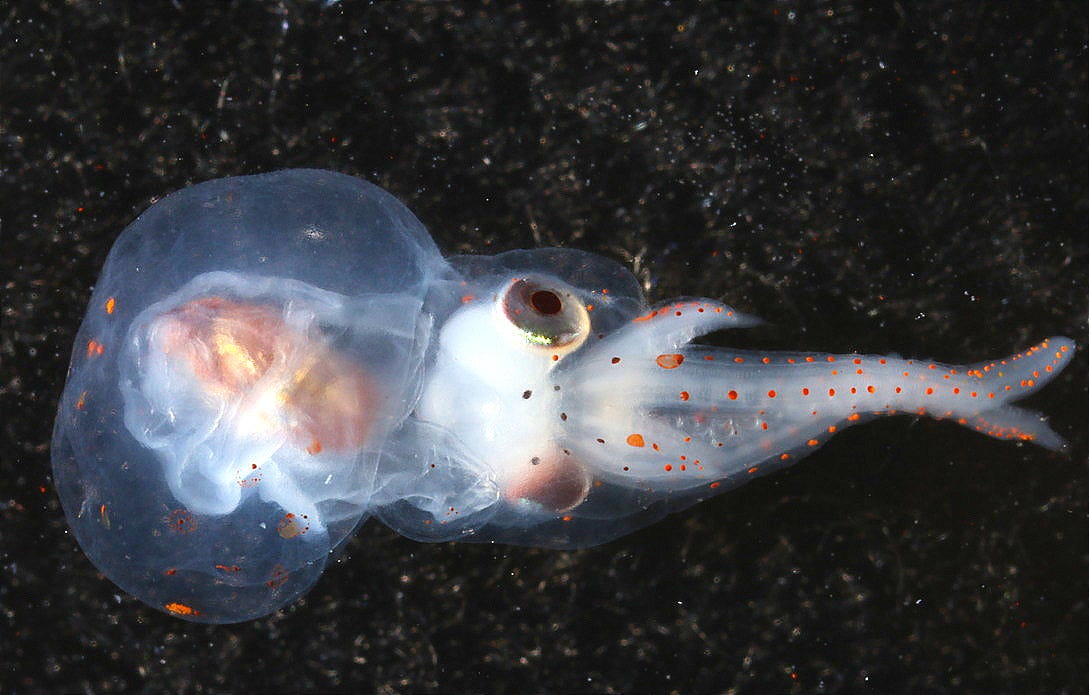
I’ve been thinking a lot about intelligence. A while back I read James Bridle’s Ways of Being and I haven’t been able to stop thinking about it, talking about it, quoting it, re-reading, etc. Like so many of my favourite books, it opens up grand new vistas of possibility by pointing out the narrowness of our current roads.
Bridle’s thesis is that AI could be a wonderful tool and an enhancement to human life, and could bring us into closer and healthier relationships with the natural world. But in order to bring this vision to life (instead of the dystopian nightmare that we see creeping in all around us), we would have to begin to model our AI inventions on a much expanded and enriched model of intelligence, rather than modelling it (as we mostly are) on a limited, anthropocentric notion of intelligence that is ultimately about domination and extraction.
When I think about online culture and its harms, by now well studied and documented, it seems that our own brains are being shaped more and more by that narrow and unimaginative model of what it means to think. Thinking needs challenges in order to expand, and if we can switch that off by retreating to an online silo, or label all who disagree with us as hateful trolls, then we don’t get that opportunity.
Even if we were to participate in robust discussions with diverse voices online, thinking also needs outside challenges. Real problems needing solutions are how we develop intelligence. Add to that the cult of the self encouraged by social media and the pervasive monetizing of interests, and suddenly being intelligent means something less like good judgment, careful reflection and open engagement with the world and more like profiting off your personal brand.
And so in addition to the capitalist goons who consciously want AI to work like a cold, reductive, extractive monster (Jesse Hirsh writes this week on emotion recognition technology, as one example), it seems inevitable that AI is heading in that direction because it’s following us in this feedback loop of existential emptiness.
So what are we cutting out of the picture of intelligence? Bridle offers a wide variety of examples of intelligence that seem to work very differently. Cephalopods are my favourite example, though he gives equally thrilling descriptions of the intelligent life of trees and mycelium and numerous other wonders of the natural world.
The cephalopod known as Octopus is a beautiful example of a creature with a brain that is not at all like ours. Our most recent common ancestor, Bridle points out, lived 600 million years ago. The word ‘cephalopod’ literally means ‘head/foot’, and this describes the way the octopus’ brain is distributed throughout its body, its arms having their own bundles of neurons that seem to be able to think for themselves but also cooperate with other parts.
When we picture thinking as something localized in our skull, it seems easier to hold onto the confused but still perhaps common assumption that a mind is sort of an immaterial commander that controls the body. The old idea that a brain was just like a computer also added support to this idea. Now that we have much more complex understandings of how brains work, we see they only do what they do because they are embodied.
Embodied, it should be added, doesn’t mean lodged within a body, as Descartes speculated about minds1 (rather confusingly, as he also believed the mind to be immaterial). It means instead that thinking or any of the functions of a mind are the products of interactions within our bodies and between our bodies and their environments. The philosophers who argue for embodied or, more properly, enactive intelligence, see it not as the work of one organ, but as an emergent property of systems of organs and environments.
The octopus’ intelligence, then, is more obvious about its embodiment, since its arms contain brains that work differently because they’ve developed in different parts of the body. Intelligence is an adaptation of a particular creature, or in this case particular parts of a creature, to a particular environment. It’s a means of survival. As the neuroscientist Lisa Feldman Barrett points out, brains are not designed to think, they are designed to run your body.
But it’s the system of bodily processes, of which a brain is just one part, that keeps us alive and thriving, and so the way it ‘runs’ your body is merely the way an executive runs a company. Which is to say, not alone, and not from some magically immaterial position that is everywhere and nowhere at once. The executive must coordinate with other vital parts that have their own knowledge and specialized skills and responsibilities. The executive keeps it all running smoothly by keeping track of the big picture and making sure everything else is doing its job, but its functioning is as much a product of interactions as is any other.
And here I’m only describing one particular kind of brain function, which we call explicitly ‘executive function’, associated with the prefrontal cortex. There are many other things the mind or brain does that are much more explicitly connected to the nervous system and the rest of the body, as well as the environment in which that body moves and acts. We may not have neurons in our limbs, but we do have neurons that only function as a result of interactions with those limbs.
So what is intelligence? Bridle points out that the more we investigate the world with an assumption that there’s only one answer to this question, and the more we try to categorize things according to our intuitive ways of understanding, the more complex and mystifying things seem to become. This is why we do well to pay attention to intelligence in the world around us, intelligences that may not be like ours, and that may in the end be multiple.
Coming up against the limits of our own thinking was what led to the discovery of the quantum world, significantly. The world we live in might well defy the logic that we’ve previously used to circumscribe the domain of the possible, and we might have missed this just because we considered that logic to be absolute rather than a representation of our own perceptual prejudices.
Even scientists have been inclined to explain away that which does not fit into their sense of the possible and the explicable. For a long time physicists reasoned away the inability of Newtonian physics to accurately predict the elliptical orbit of Mercury, for example, by shrugging and saying that it was really only off by a little. It was a very uncomfortable thing, this little bit of error and uncertainty in the Newtonian universe where everything was supposed to be at least theoretically intelligible and predictable. So they did everything but accept what was right in front of them. Maybe, they thought, we’re just missing some information that would explain this?
But the truth turned out to be a lot wilder. And it took a physicist or two to say ‘huh, maybe that crazy finding that cannot possibly be, because it suggests that things can be in more than one place at the same time and that’s obviously wrong…maybe, just maybe, it can be? Maybe we were wrong to think it was impossible just because it so clearly defies our own perceptions and ways of understanding and the logic we’ve built on that?’
Bridle’s point is that we don’t exactly know what intelligence is, and when we think we do we may be missing a whole lot of it. If we can ask that question in a more open-ended way, not looking to pin down and prove that one kind of thing alone constitutes intelligence, then maybe we can see so much more variety and potential in the notion of intelligence, and in what we create in terms of its artificial versions.
On a related note, I’m just starting a book called Vibrant Matter, by the political philosopher Jane Bennett, that raises the question of why we’re so sure of the animate/inanimate or life/matter distinctions, and what we might gain if we were instead to look at interactions and systems of energies and powers and bodies as the real loci of change in the universe. As Bennett puts it,
The philosophical project of naming where subjectivity begins and ends is too often bound up with fantasies of a human uniqueness in the eyes of God, of escape from materiality, or of mastery of nature
What have we been missing by centering our own perspective so fully? When we finally admitted that the earth was not the centre of the universe, it turned out that we’d been missing quite a lot!
This is very much in keeping with the Nietzschean/Deleuzian interests that I’ve been cultivating over many years, and Bennett’s book explicitly connects these ideas to matters of ecology and activism on behalf of the natural world and of re-thinking our place within it. I’m looking forward to diving into these ideas with a thinker as rigorous and original as Bennett (whose book The Enchantment of Modern Life I found riveting).
As depressing as the emerging world of AI might seem right now, it’s good to know that there are brilliant people like Bridle who are actively working for a better world. I see a lot of it here on Substack too – people pushing hard against the AI status quo in so many ways, whether that’s writing about the history of and alternative directions for technology, or developing alternative economies and communities, or continuing to make art that both relies on and fosters a broader, richer sense of what intelligence might be.
I saw an absolutely transcendent show the other night that left me with a lot of hope. Rhiannon Giddens and the Old-Time Revue continue to make music and tell stories that can only come from a tradition of hundreds of years of human experience and engagement with the world. Supporting artists like this is another way to build hope in the future we want. In the meantime, I’m counting on the likely scenario in which Ted Goia is right about all this. He writes this week that the people can’t be fooled for long, and that a change is coming.
I’m dancing as fast as I can to avoid discussing the distinction between ‘mind’ and ‘brain’! But I think I’m justified in using ‘mind’ to point to intelligent activity, and ‘brain’ to denote a specific organ.
I love the concept of expanding our understanding of intelligence to develop better artificial intelligence. It also requires a shift of control away from those pursuing selfish interests to those who aspire to shape it for the good of society. Many of the people most wary of AI are probably the ones we need most to steer its future.